In modern life, electricity is the lifeline of household operations. With the popularization of new energy technologies, "providing backup or even primary power supply for homes" has become a major concern for many families. Traditional diesel or gasoline generators are noisy, polluting, and maintenance-intensive, while new portable solar power systems (commonly marketed as "solar generators") are entering the household arena with their clean, quiet, and easy-to-operate features. So, can brands like MECO POWER truly provide power for homes? The answer is yes—but their applicability and implementation require a deep analysis from the perspective of system design and demand matching.
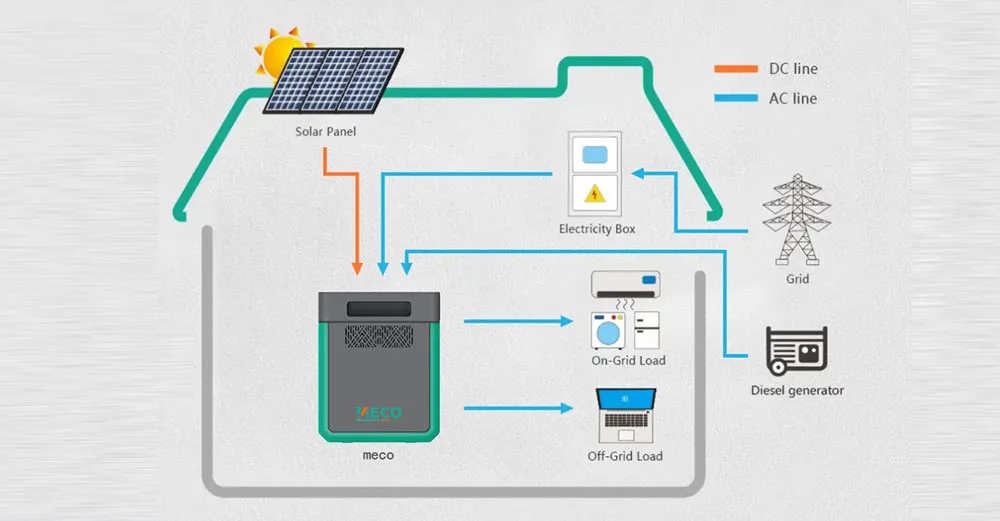
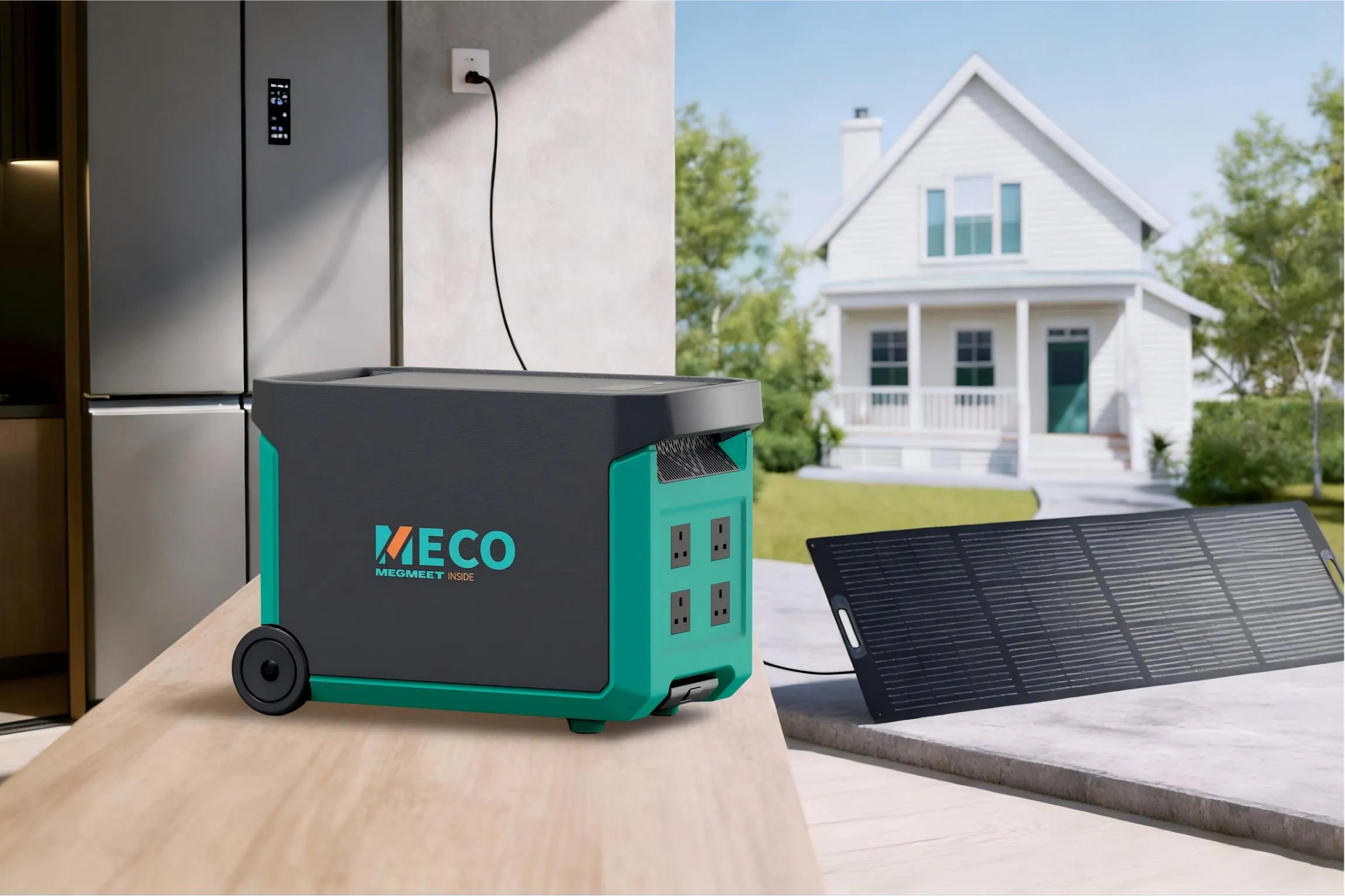
MECO POWER solar generator provides power to houses
Ⅰ. Clarifying Boundaries: Tiered Demand for "Powering a House"
The electricity demand of a "house" is multidimensional, ranging from charging a phone to running an air conditioner, with power requirements spanning from a few watts to several kilowatts. Therefore, discussing "powering a house" must begin with demand tiering—a common source of confusion for consumers facing a plethora of products on the market.
According to market information, a standard solar generator (also known as a power station) is essentially a mobile energy system integrating high-capacity batteries (such as lithium-ion or lithium iron phosphate), a high-power inverter (converting DC to AC), a smart battery management system (BMS), and an MPPT charge controller. Its power capability depends primarily on two core parameters: rated output power (watts/W or kilowatts/kW) and energy storage capacity (watt-hours/Wh or kilowatt-hours/kWh).
Rated output power determines how many high-power appliances can be operated simultaneously. For example, a 500W generator can power a laptop, several LED lights, and a fan, but cannot start an air conditioner requiring an instantaneous surge of over 1500W.
Energy capacity determines how long power can be sustained after a full charge. For instance, a 1kWh (1000Wh) system can theoretically run a 100W TV for about 10 hours.
Based on this, household electricity scenarios can be divided into three tiers:
1.Essential Device Powering
Ensuring uninterrupted power for low-power (typically under a few hundred watts) basic life needs such as refrigerators, routers, lighting, and mobile/computer charging.
2.Partial Lifestyle Load Powering
Building on the above, adding appliances such as TVs, small rice cookers, fans, and microwaves, with total power demand typically between 1kW and 2kW.
3.Primary or Backup Power Supply
Attempting to cover most household appliances, including high-power devices such as electric kettles, air conditioners (which have high startup power), and induction cooktops, with power demands typically exceeding 2kW, and even reaching 5kW or higher.
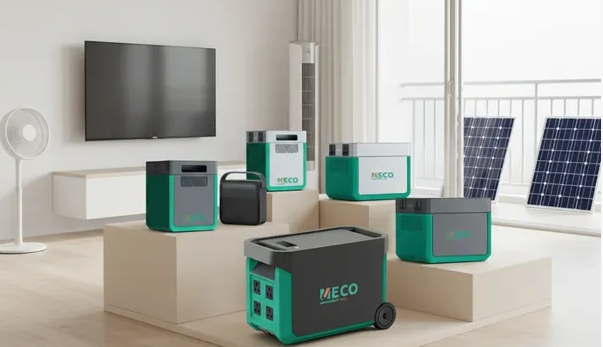
According to MECO POWER’s official documentation, its product lineup spans models from 1kWh to 5.4kWh with corresponding output power levels, precisely aligning with the above-tiered household electricity demands. This makes it more than just a "big power bank"—it offers systematic solutions for specific scenarios.
1. Solution for Small Apartments or Emergency Backup: 1kWh/ 1kWh Pro Models
1.1 Capacity Analysis
1kWh of energy storage equals 1 unit of electricity. For a household with an average daily consumption of around 10 units, this is not intended for 24/7 power supply, but rather as emergency backup for essential devices.
1.2 Scenario Matching
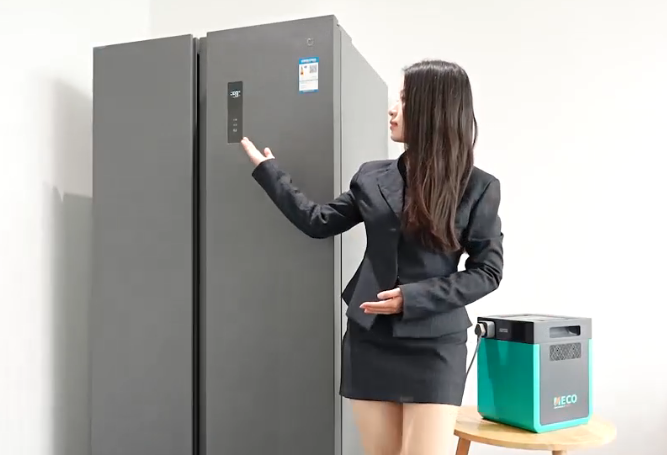
Can reliably power a refrigerator (100–200W) for several hours, ensuring routers, lighting, and communication devices remain operational during brief grid outages. For example, during short-term maintenance, minor power interruptions, or as an outdoor temporary workstation, its value is significant.
2. Solution for Small Families or Extended Use: 1.8kWh and 2kWh Models
2.1 Enhanced Capability
Capacity upgraded to 1.8–2 units of electricity, with output power also increased (e.g., the 2kWh model offers 1200W output). This enables longer runtime or simultaneous operation of more mid-power appliances.
2.2 Scenario Matching
In off-grid cabins or as supplementary power for short-term travel (e.g., RV living), it can support lighting, basic kitchen appliances (rice cooker, electric kettle), and entertainment devices (TV) for over a full day. At this point, it has evolved from a simple backup source to a primary power source in specific scenarios.
3. For Medium-to-High Power Demands and Outdoor Challenges: 3.6kWh / 5.4kWh Series
3.1 Deep Power Capability
These models offer powerful output of 3000W to 5000W and energy reserves of 3.6 to 5.4 units. Their system integrity allows them to accommodate diverse appliances—from energy-saving lamps to TVs and refrigerators.
3.2 Scenario Matching
As noted in the materials, they are ideal for off-grid areas (e.g., field workstations, remote outposts) and outdoor camping expeditions. In energy-conscious scenarios, they can even serve as primary or emergency power sources for households, covering broader loads including kitchens and office equipment. With rapid solar panel integration, continuous energy replenishment is achievable.
3.3 Core Technical Support
To achieve the above capabilities—especially as a stable power source—internal technological integration is essential. MECO POWER generators universally feature MPPT controllers to enhance solar charging efficiency, utilize lithium iron phosphate batteries with up to 8,000 charge cycles to ensure long-term stability and durability, and integrate multiple safety protection functions. This all-in-one design significantly lowers user barriers and enables plug-and-play convenience.
Ⅲ. System Awareness: Realistic Considerations of Solar Power and "Powering a House"
Although home solar generator technology has advanced significantly, unlike large grid-tied photovoltaic systems, it is constrained by portability and cost when providing full primary power to an entire household—a key distinction widely recognized in the market.
1. Capacity and Endurance
A typical household consumes 5–30+ units of electricity daily. Even a 5.4kWh generator, fully charged, cannot independently sustain a modern high-consumption home for a full day. Its role is more accurately described as backup for critical loads, primary power in specific scenarios, or enabling a small self-sustaining cycle through solar replenishment.
2. Power Limitations
Although high-power models like the 3.6kWh unit can drive high-power appliances, note that these devices often have surge startup power (e.g., air conditioner compressors may draw several times their running power), requiring the generator to have sufficient overload capacity or power headroom.
3. Energy Replenishment
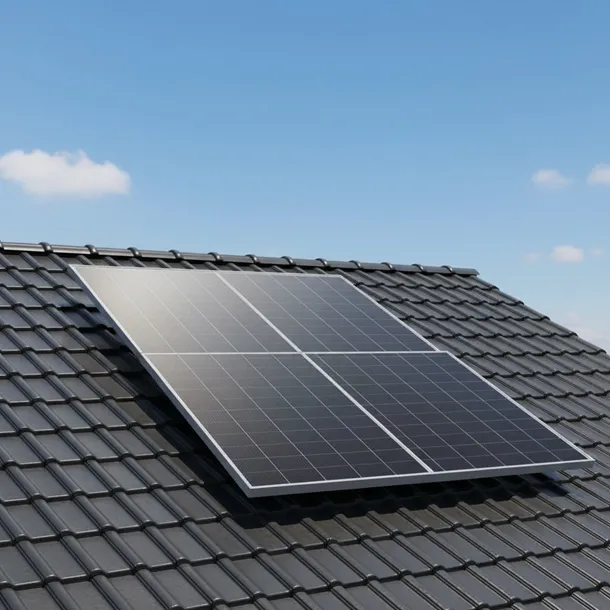
Charging solely via grid power is for emergency use. To achieve off-grid autonomy, solar panels are essential. According to the provided data, under ideal sunlight,panels may require 4–8 hours to fully charge, defining the system’s daily generation and replenishment ceiling—and thus limiting the degree of "self-sufficiency."
Ⅳ. Precise Selection: How to Determine Whether a Solar Generator Meets Your Household Power Needs
For consumers, evaluating whether a system can meet "household power" needs can follow this decision path:
Define Core Needs List: List appliances you must keep running during outages (e.g., refrigerator, medical devices) and those you want to use, and identify their rated power (W) and daily runtime.
Calculate Daily Energy Consumption: Based on appliance power and usage time, estimate total daily energy consumption (Wh)—this determines the required total battery capacity.
Match Device Power Requirements: Identify the single highest surge power and total combined running/surge power of your appliances. This determines the required generator rated output power, and it is recommended to reserve 20–30% extra capacity for motor-driven devices.
Evaluate Replenishment Methods: If planning long-term or heavy reliance, assess whether its solar or grid charging speed matches your usage rhythm.
Compare Product Specifications: Carefully review key parameters of target products: capacity, rated/peak power, supported charging methods, and battery type and lifespan (e.g., lithium iron phosphate offers longer cycle life). Brands like MECO POWER offer a series from 1kWh to 5.4kWh, providing diverse options from essential backup to multi-scenario semi-primary power.
Ⅴ. Conclusion
Returning to the core question: Can MECO POWER solar generators power a house?
The answer is open yet affirmative—with a critical qualifier: it can provide tiered, scenario-specific power support.
For simple emergency lighting and communication, or for supplying life electricity in remote small dwellings or outdoor recreation, solar generators with capacities and power outputs in the thousands of watt-hours are entirely feasible and efficient. Through highly integrated, safe, reliable, and clean operation, they offer users an energy alternative independent of the grid.
However, expecting a single portable device to fully replace the traditional grid and provide uninterrupted, unlimited power to a large, high-consumption modern household remains technologically and economically challenging today.
Therefore, the understanding of "powering a house" should shift from "complete replacement" to critical backup, scenario reinforcement, and off-grid autonomy. When users clearly define their usage scenarios and demand tiers, products like MECO POWER—with clearly defined power and capacity spectra—can precisely fulfill their value, becoming a secure, reliable, and vital component in the household energy landscape, enabling true clean energy freedom.

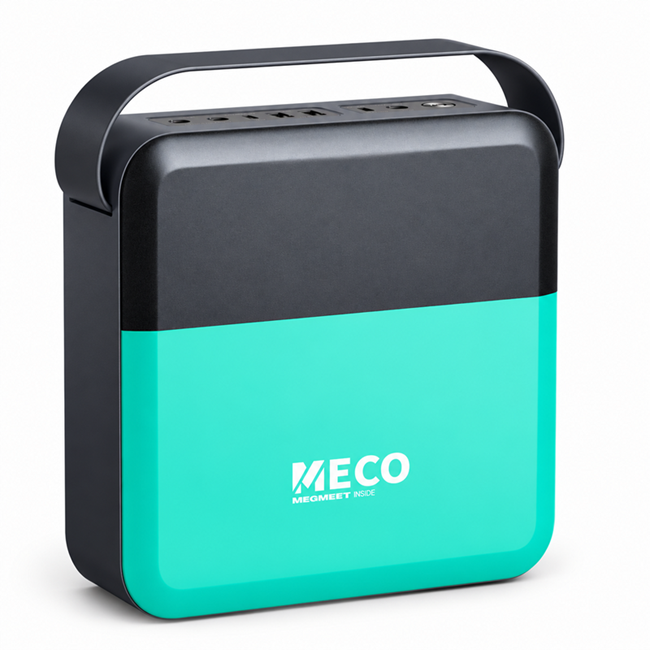
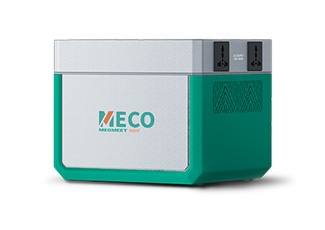 Meco 1kWh Solar GeneratorApplied to small household appliances
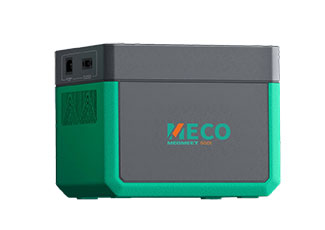 Meco 1kWh Pro Solar GeneratorSuitable for small-scale space solar power generators
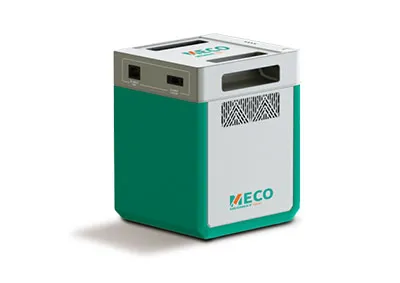 Meco 1.8kWh Solar GeneratorSuitable for small-scale space solar power generators
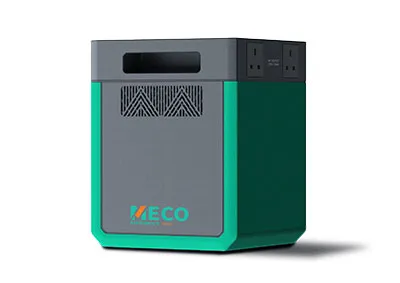 Meco 2kWh Solar GeneratorPowers your entire household
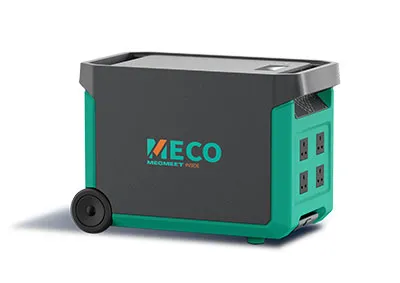 Meco 3.6kWh Solar GeneratorPerfect for outdoor adventures and camping
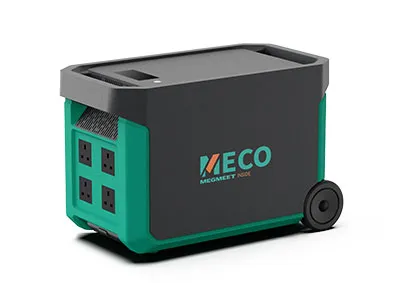 Meco 3.6kWh Pro Solar GeneratorProvides reliable high-power power support for modern households